Microbiology Laboratory
Microbiological analysis is a foundation of water, environmental and public-health monitoring because it reveals microbial contamination and sanitary quality. We work with two internationally recognised methodologies: IDEXX defined-substrate technology and membrane filtration.
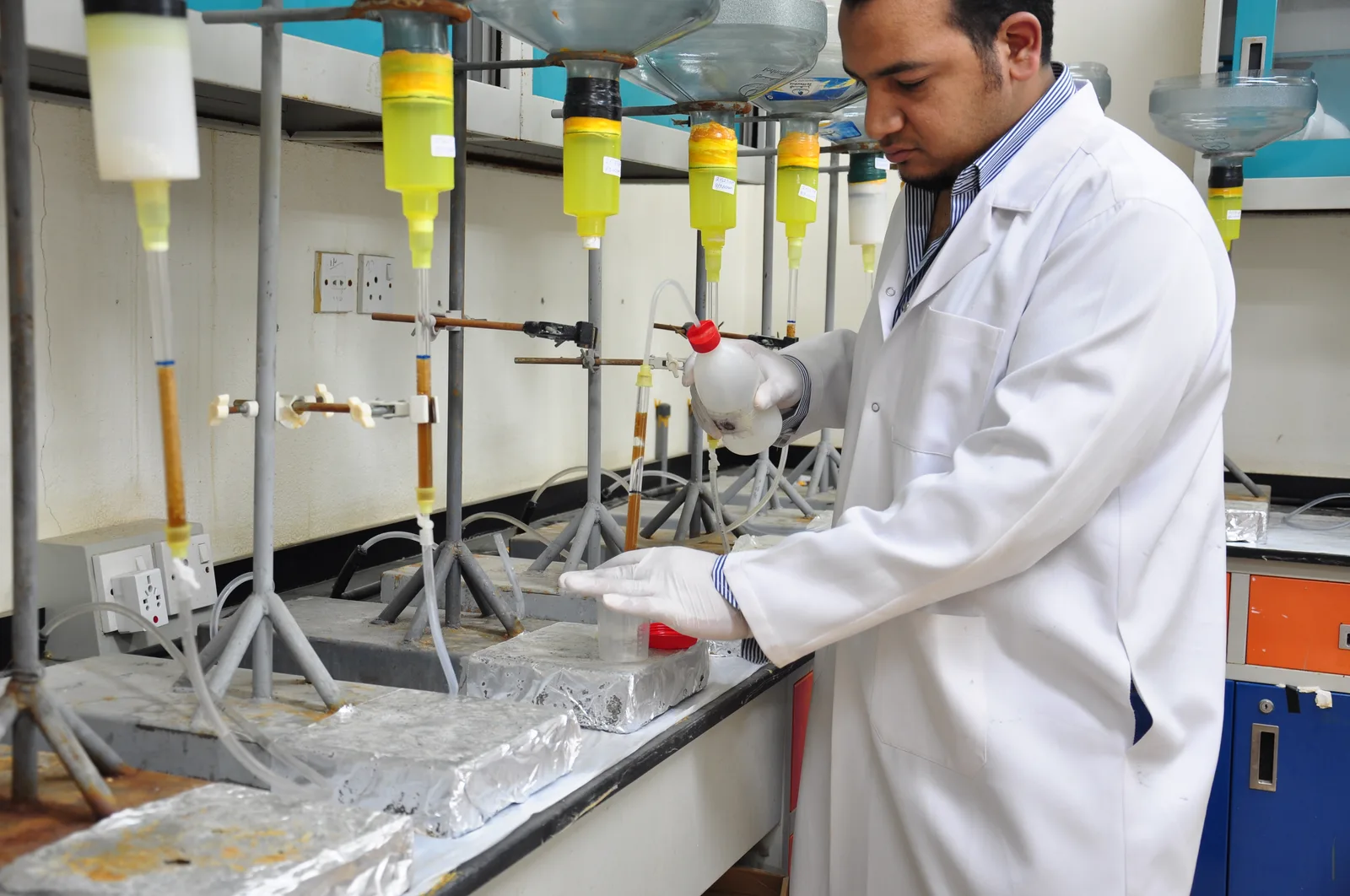
Internationally recognised analytical methods
IDEXX defined substrate
Enzyme-specific substrates that produce a colour change or fluorescence when metabolised by the target organism. Total coliforms and E. coli are read in multi-well trays: coliforms change colour, E. coli fluoresces under UV, and the result is quantified by Most Probable Number.
Membrane filtration
A classical, highly standardised method for enumerating bacteria in water and environmental samples: the sample passes through a sterile membrane, typically 0.45 µm, retaining the organisms, which are then cultured on selective media.
Microbiological tests and methods
Total coliforms
IDEXX method with Colilert-18, detecting beta-D-galactosidase enzyme activity.
Faecal coliforms
IDEXX method incubated at 44.5°C; a yellow colour indicates a positive result.
Escherichia coli (E. coli)
IDEXX method with Colilert-18.
Faecal streptococci
On faecal streptococcus agar at 37°C.
Heterotrophic plate count (HPC)
Detecting microorganisms that utilise organic carbon.
Pseudomonas aeruginosa
On Pseudalert nutrient medium using MPN methods.
Enterococcus
Detecting beta-D-glucosidase by fluorescence under UV.
Legionella
On Legionella nutrient medium using MPN methods.
Salmonella spp.
By membrane filtration with selective enrichment and plating.
Our other laboratories
Microbiological water testing enquiries
Contact us regarding the number of samples, the target organisms and the method.
Contact our team